Boondi is a popular ingredient in Indian snacks and sweets. From crispy salted boondi and spicy namkeen mixtures to sweet boondi and traditional laddoos, it is widely used across the Indian food industry.
However, producing boondi in large quantities requires more than a good recipe. Maintaining uniform size, consistent frying, and a steady production rate can become challenging when manufacturers rely entirely on manual methods.
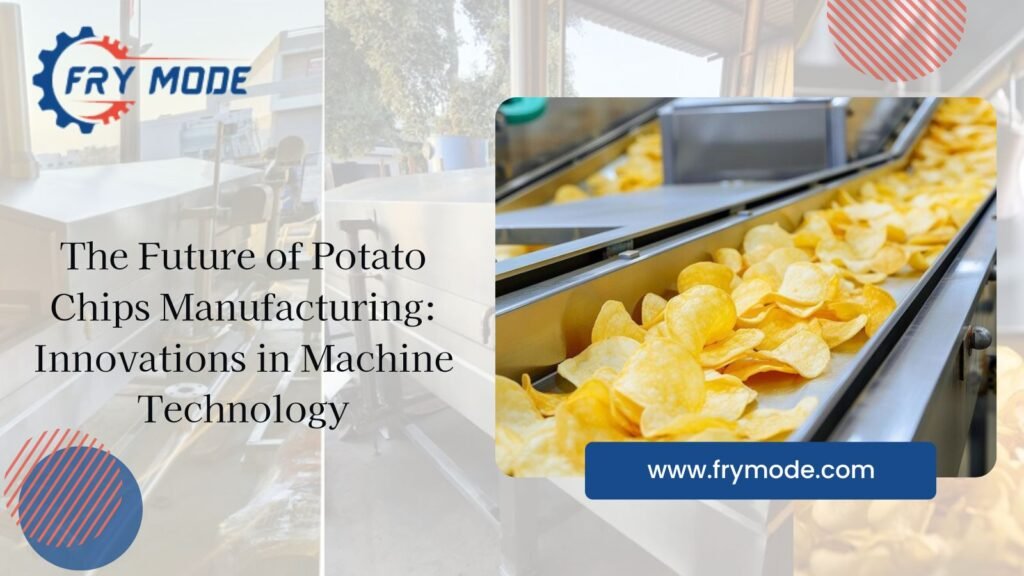
This is where a boondi making machine becomes valuable.
Modern boondi machines help food manufacturers improve production consistency, reduce repetitive manual work, and handle larger quantities more efficiently.
Whether you are starting a namkeen business or expanding an existing sweet manufacturing unit, selecting the right equipment can make a significant difference.
In this guide, we explain how boondi making machines work, their types, important features, and what Indian manufacturers should consider before buying.
A boondi making machine is commercial food processing equipment designed to produce small, round droplets of gram flour batter that are fried to make boondi.
Traditional boondi production involves pouring batter through a perforated ladle into hot oil. Although this method works for small batches, it requires skilled workers and continuous manual attention.
A commercial boondi machine uses a controlled batter dispensing arrangement to form droplets more consistently.
Depending on its design, the equipment may include a batter hopper, perforated plate, dispensing mechanism, frying system, and product discharge arrangement.
A commercial boondi making machine can be used for several products, including plain boondi, salted boondi, masala boondi, and boondi intended for sweets.
The final product characteristics depend on the batter recipe, droplet formation, frying conditions, and further processing.
Understanding the working process helps manufacturers choose suitable equipment.
Step 1: Batter Preparation
The process begins with preparing a smooth batter using besan (gram flour), water, and ingredients required for the product.
Batter consistency is important because it affects droplet formation.
Very thick batter may not pass smoothly through the perforations, while thin batter may produce irregular shapes.
Step 2: Batter Feeding
Prepared batter is transferred into the machine’s feeding hopper.
Depending on the equipment design, the batter is dispensed through a controlled feeding system.
Step 3: Boondi Formation
The batter passes through a perforated plate or suitable droplet-forming mechanism.
The size and arrangement of the openings influence the size of the boondi.
Uniform feeding helps maintain more consistent droplet formation.
Step 4: Frying
The formed droplets enter hot edible oil.
Controlled frying develops the desired texture and color. Crispy namkeen boondi and softer boondi for sweets may require different frying conditions.
Step 5: Oil Removal
After frying, excess surface oil is allowed to drain or is removed using suitable de-oiling equipment.
Step 6: Further Processing
Finished boondi may be seasoned, blended into namkeen mixtures, or transferred for sweet preparation.
For packaged namkeen, the product is cooled and packed using suitable packaging equipment.
Boondi production equipment is available in different configurations.
Manual equipment typically uses a perforated ladle or plate to form droplets. It is suitable for small production quantities and businesses with limited initial investment. However, output depends heavily on operator skill.
A semi-automatic system assists with batter dispensing while operators handle some production activities. It can improve consistency and reduce repetitive work compared with fully manual production. This arrangement may suit growing sweet shops and namkeen manufacturers.
An automatic boondi making machine uses mechanical or electronically controlled arrangements to regulate batter feeding and droplet formation. Depending on the configuration, it may integrate with frying and product handling systems. Automatic machines are useful when manufacturers require steady production, repeatable settings, and reduced manual intervention.
| Feature | Manual | Semi-Automatic | Automatic |
|---|---|---|---|
| Initial investment | Low | Moderate | Higher |
| Batter dispensing | Manual | Mechanically assisted | Controlled system |
| Labor requirement | High | Moderate | Lower for repetitive tasks |
| Production consistency | Operator-dependent | Improved | More repeatable |
| Production volume | Small batches | Small to medium | Medium to large |
| Maintenance complexity | Low | Moderate | Higher |
| Best suited for | Small shops | Growing businesses | Commercial manufacturers |
Uniform Droplet Formation
Consistent boondi size helps improve product appearance and frying uniformity. Look for equipment that provides controlled batter feeding and suitable perforated plate options.
Adjustable Production Settings
Different products may require different boondi sizes and batter flow rates. A machine with appropriate adjustment options can support multiple recipes.
Food-Grade Construction
Food-contact components should be made from suitable materials that support hygienic operation. Stainless steel is commonly preferred for food processing equipment because it is durable and relatively easy to clean.
Reliable Frying Arrangement
If the machine includes a fryer, check the temperature control system, heating arrangement, and product removal method.
Easy Cleaning
Besan batter can accumulate around dispensing components. Machines with accessible hoppers, plates, and food-contact surfaces make cleaning more practical.
Maintenance Support
Confirm the availability of spare parts, technical assistance, and operating instructions before purchasing.
| Pricing Factor | Impact on Investment |
|---|---|
| Production capacity | Higher output may require larger equipment |
| Automation level | Additional controls and mechanisms increase complexity |
| Material construction | Food-grade materials and fabrication affect cost |
| Frying system | Integrated fryers add equipment and utility requirements |
| Size adjustment | Interchangeable plates and controls may affect pricing |
| Installation | Site preparation and commissioning add costs |
| After-sales service | Warranty and support terms affect long-term value |
Capacity selection should begin with your expected daily production. For example, if your business needs 400 kg of finished boondi during an eight-hour shift, the average required finished output is:
400 ÷ 8 = 50 kg per hour.
However, this is only the average target. You must also account for cleaning, production interruptions, changeovers, and normal operating losses. Additionally, confirm whether the machine’s advertised capacity refers to batter input or finished boondi output. These figures are different because moisture is lost during frying. Ask the manufacturer to demonstrate output using your intended batter recipe. This provides a more useful comparison than relying only on brochure specifications.
| Production Problem | Possible Cause | Recommended Action |
|---|---|---|
| Irregular boondi size | Inconsistent batter flow | Check batter consistency and dispensing settings |
| Boondi sticking together | Excessive feed rate or unsuitable frying conditions | Adjust feeding and frying parameters |
| Uneven color | Temperature variation | Check oil temperature and batch loading |
| Excessively oily boondi | Frying or draining issues | Review frying conditions and de-oiling |
| Blocked perforations | Batter lumps or residue | Filter batter where appropriate and clean the plate |
| Low production output | Feeding restrictions or downtime | Inspect the dispensing system and workflow |
Boondi making equipment serves different segments of the Indian food industry.
Namkeen manufacturers use boondi for salted snacks, masala boondi, and mixture products. Sweet manufacturers prepare boondi for products such as boondi laddoo and sweet boondi. Commercial kitchens and caterers may use boondi in large-scale food preparation. Packaged snack businesses require consistent boondi size and texture to maintain product quality across batches. The machine configuration should match the intended application because crispy namkeen boondi and softer sweet boondi can have different processing requirements.
Investing in the right boondi making machine can help Indian snack and sweet manufacturers improve consistency, reduce repetitive manual work, and manage commercial production more effectively.
Manual equipment may be sufficient for small operations, while semi-automatic and automatic systems can support growing production requirements.
Before purchasing, compare machine capacity, droplet formation, construction quality, frying compatibility, maintenance needs, and manufacturer support.
The best boondi machine is not necessarily the most expensive. It is the equipment that meets your product requirements, fits your production capacity, and delivers reliable long-term performance.


 Users Last 30 days : 963
 Total Users : 14979
We are one of the foremost Ahmedabad based Manufacturer, Wholesaler and Retailer of Namkeen fryer machine, Namkeen making machine, fully automatic machine, continuous Namkeen fryer machine, fully automatic Namkeen machine… View More
Copyright © 2026 FRYMODE FOOD EQUIPMENT PVT LTD
Website Design & Development By : Dev Digital Media – SEO Company